 Perilous
 Perilite & Perilwood
The shard's own top-tier ore and lumber - one rank above valorite and frostwood, gathered only at the hamlet, and worth fighting over.
Overview
Perilite and Perilwood are the shard's own top-tier raw materials, and they sit a full rank above the classic best. Perilite is the top ore, one step past valorite; Perilwood is the top lumber, one step past frostwood. They are the endgame reagents of the crafting economy - the stuff the best gear and the siege engines are made from.
What sets them apart from ordinary resources is where they live. You do not find Perilite and Perilwood scattered across the map. They come only from the mine and grove inside a hamlet, which means controlling the hamlet controls the supply.
Perilite
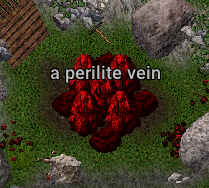
Perilite is the shard's most valuable ore, sitting one rung above valorite at the very top of the ladder. You gather it from the veins and rocks in the hamlet mine - each standing vein is a harvest point that yields perilite ore, which you smelt into ingots to craft with.
Perilwood
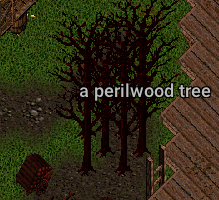
Perilwood is the lumber counterpart: the rarest, hardest wood on the shard, one rung above frostwood. You harvest perilwood logs from the trees in the hamlet grove, then mill them into boards at a workstation for crafting.
Harvesting
Gathering Perilite and Perilwood works differently from ordinary mining and lumberjacking. At the hamlet nodes you simply double-click a standing vein or tree while you are within a few tiles - no Mining or Lumberjacking skill and no pickaxe or hatchet required. Your character swings, and an ore or a log goes into your pack.
Each mine and grove holds a shared pool of up to 100 ore or logs that refills slowly, about one every few minutes, so a busy node can be worked down and will replenish over time. The catch is access: the hamlet's walls and its guild-only gate ward are what keep outsiders away from the harvest, not any check on the node itself. If you can reach a standing vein, you can mine it - which is exactly why guilds fight to hold the ground it sits on.
Destroyed in Siege
Because the mine and grove sit inside a hamlet, they are part of the siege system. Each rock and each tree is a destructible node with about 1,000 hit points. During a live siege, attackers using siege weapons - the Siege Hammer, Battle Spike, and Siege Cannon - can smash the nodes down. A destroyed vein or tree vanishes and stops yielding; knock them all out and the mine or grove is shut off entirely until it is rebuilt.

Defenders rebuild them at the hamlet obelisk. Its repair panel has a Perilite Mine and a Perilwood Grove category - heal one back to full with Hamlet Repair Deeds and every rock or tree reappears and the node works again. Denying an enemy their Perilite and Perilwood is a real siege objective, not just collateral.
What They Build
These are top-tier materials for a reason - they feed the best recipes on the shard, and they carry a perk ordinary resources do not:
- An extra enchant slot. Weapons and armour crafted from Perilite or Perilwood hold three enchantments instead of the usual two - a full slot more than anything made from a lower tier. See Enchanting.
- A signature look. Everything crafted from them takes a distinct colour, so Perilite and Perilwood gear is recognizable on sight.
- Best-in-slot tools. The wood tier matters: a Perilwood disenchantment wand carries the most charges of any wand, and a Perilwood sport-fishing pole has the fastest cast on the shard.
- Siege and endgame gear. The Siege Cannon and the highest-end weapons, armour and pet equipment all lean on this top tier. See Profession Workstations for where the crafting happens.
Exact yields, node health, refill timers, and recipe quantities are set in-game and are the numbers to confirm at the mine, the grove, or a crafting station - this page describes how the resources behave, not a fixed table.
Tips
- No skill needed to harvest at the hamlet - if you can reach a standing vein or tree, you can gather from it.
- The supply is at the hamlet, and access follows whoever controls it, so watch the siege calendar.
- During a siege the nodes can be destroyed. If the mine looks dead, it may have been knocked out, not mined out.
- Save Perilite and Perilwood for gear you mean to enchant - the extra slot is wasted on throwaway items.